


Last year at this time, the world was still struggling with a pandemic. This year, hearts and minds are turned towards the people of Ukraine. Nevertheless, Jewish people around the world are celebrating the holiday of Purim—as they have ever since they faced extinction in ancient Persia 25 centuries ago—with exuberant joy and steadfast faith in G‑d’s goodness in a way that transcends every difficulty.
“I’m excited to see happy faces celebrating together, coming back to the celebration of Judaism and even stronger than before,” says Rabbi Nochem Tenenboim, co-director, with his wife Rivkie, of Chabad-Lubavitch of Hewlett in Hewlett, N.Y.
Purim, celebrated on the 14th of the Jewish month of Adar, begins on Wednesday night after sundown and lasts through Thursday evening. Shushan Purim, celebrated in walled cities like Jerusalem, begins on Thursday evening and lasts until the start of Shabbat on Friday. The holiday marks the deliverance of the Jewish people from the wicked Haman, who sought to destroy the Jewish people, in the days of Queen Esther of Persia.
In Ukraine, Europe and Israel, there is a different kind of joy. Many of those celebrating the holiday this year are just happy to be alive. In Kfar Chabad, Israel, there is a giant Purim celebration for the hundreds of Ukrainian refugees who have managed to make it to safety in Israel.
In Kherson, Ukraine, Rabbi Yosef Yitzchak Wolff stood in the city’s beautiful renovated synagogue clutching a Megillah. All around the Russian-occupied city were bombed-out buildings, food shortages and restrictions on movement, but for a few brief moments on Purim eve, there was “light, joy and celebration” in the timeless words of the Scroll of Esther (Megillat Esther) that the rabbi read aloud for the few who attended services.
It was a similar scene that repeated itself in dozens of Chabad synagogues all over Ukraine. The crowds were smaller than usual, and the somber mood of the nation was palpable, but so was the joy.
In Odessa’s main synagogue, several dozen worshippers—mostly men between the ages of 18-60 who are not allowed to leave the country—wore neon-green plastic hats and goofy sunglasses, allowing the Purim levity to provide a brief respite from the stresses of daily life in wartime Ukraine.
They were led by Rabbi Avraham Wolff, who recently returned to the city after accompanying a convoy that included the 120 children of the Mishpacha Orphanage to safety.
“We will read the Megillah, we will pray, we will masquerade and we will rejoice,” Wolff told Chabad.org on Tuesday. “Everything will be as joyous as possible.”
Holiday Celebrates Deliverance From Danger
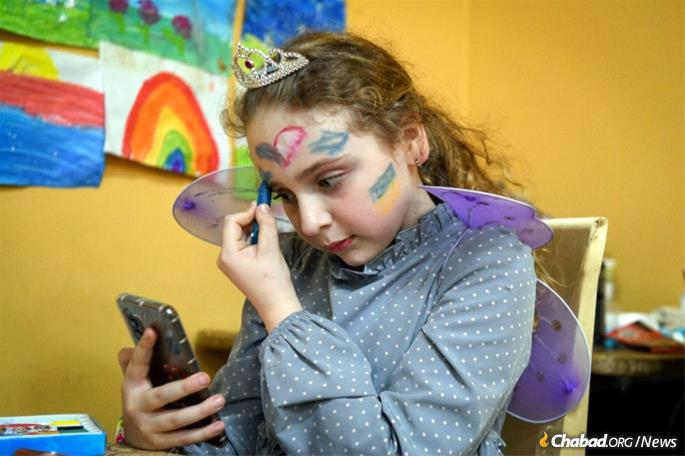
Last year in Hewlett, Chabad had to trade large in-person community celebrations for small tent, truck and drive-in options. With the pandemic basically over—it was two years ago exactly when lockdowns began—Tenenboim is expecting several hundred people. The warm weather the Northeast is experiencing now allowed them to plan their Purim celebration as an outdoor BBQ, with hot dogs, burgers, chicken and traditional Purim foods such as hamantaschen. Their celebration will have a “Purim in the Jungle” theme, and will include a drum circle and an animal show in addition to a Megillah reading and face-painting.
The mitzvot of the holiday are related to the idea of not only celebrating as individuals, but really as a community, says the rabbi. “We are very much looking forward to welcoming everybody back,” he says. Even people who have never celebrated Judaism may step out to celebrate, adding that Chabad has an after-party so people can stay longer and talk more about the meaning of the holiday. “We hope that more than before, people are looking to get the spirit of true joy from Purim.”
They kicked off their Purim celebrations with a crowd at a hamantashen bake on Sunday, March 6.
In Israel, Rabbi Yisroel and Shoshana Goldberg, co-director of Chabad of Rechavia, Jerusalem, are looking forward to welcoming tourists and locals alike back for the popular Azza Zaza program, which pivoted from offering thousands the chance to participate in Purim Mitzvot in restaurants to outdoor celebrations during the pandemic.
They’ll be offering about 100 Megillah readings around the clock in their Jerusalem neighborhood, along with some 50 more for people and families who are homebound, and giving out 5,000 mishloach manot—baskets of treats. They’re adding new locations this year, and eager to diversify their locations as restrictions are lifted. “I can’t say corona is over, but it’s definitely a little bit behind us,” he says. “After two years of almost no tourists over here, you can see the difference over the past few weeks.”
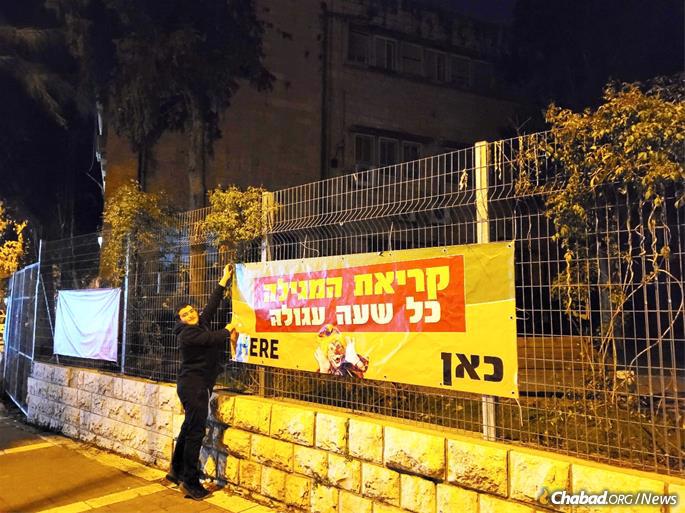
Phone calls have been rolling in from tourists wanting to know where to find Megillah readings, he says. He’s delighted, he adds, to see them come back to Rechavia, where there are Jews from all backgrounds. “Jerusalem is a city that brings everybody together, and when you have such a massive activity—so many opportunities for people to hear the Megillah, and people running in the streets with a flier to see which time in which place—it’s a great feeling.”
He and other rabbis note that this year, along with the celebration, everyone’s prayers are with the innocent men, women and children in harm’s way in Ukraine.
“Hopefully, this will be a turning point—that people should be more positive and more joyful and more friendly, and when we act like that, we can bring great blessing to the whole world,” says Goldberg.
The Four Mitzvot of the Holiday
Meanwhile, a group of a dozen yeshivah students from Pennsylvania have arrived to lead Megillah readings and Purim celebrations in six different locations in Minnesota and North Dakota. Their celebrations are usually held in community rooms adorned with festive decorations, where people can celebrate the mitzvot of Purim with their fellow community members, says Rabbi Yona Grossman, co-director of Chabad of North Dakota with his wife, Esti.
“This is really an opportunity to connect with other community members,” he says.
Grossman is expecting many more people to come out to celebrate this year.
He says he hopes the holiday brings home the message that it’s important to have more Jewish pride than ever, including in his state, which is home to fewer than 1,000 Jews. “The message of the Megillah is that no matter where we find ourselves, we should be proud Jews, and I think that’s especially true in a place where the Jewish community is spread out, as it is here.”
Grossman highlighted the four mitzvot of Purim: hearing the Megillah; giving to the poor; sending gifts of food to friends and neighbors; and participating in a festive meal. He also noted that there are more needy Jews than ever: “That’s something to increase over every other year, is an increase in our giving.”
The four mitzvot, along with a wealth of inspiration and information about the holiday, are detailed in Chabad.org’s special Purim section, which features the insights of the Rebbe—Rabbi Menachem M. Schneerson, of righteous memory.
Rabbi Pesach and Chana Burston, co-directors of Chabad of Orange County in Chester, N.Y., are likewise getting ready for a themed Purim celebration.
Echoing other rabbis, he says that he’s noticed people who don’t usually come to their Purim party coming out of the woodwork for social interaction and a sense of community. Though Chabad offered food baskets and drive-bys throughout the pandemic, to actually be able to see other people’s faces without masks and make those connections is extremely important, he says.
From young families to retired individuals, Purim is one of the holidays that creates a stronger sense of community, he explains. “These are times everybody gets to see each other,” he says, adding that the fact it’s a costumed holiday is extra notable this year. “I think it’s ironic that the first holiday we’re able to celebrate without CDC restrictions is the one where you’re supposed to wear masks.”
Burston stresses that it’s important to recognize the pain being experienced by those in Ukraine even while joyously celebrating the holiday of Purim. “Think of any wedding. “A wedding is the height of a person’s joy, and yet we break a glass to recall the destruction of Jerusalem. But we don’t not get married; we don’t not celebrate. So we want to be able to celebrate the things we need to celebrate, but at that celebration, we want to make sure to take a moment of prayer, a moment of silence, and keep in mind our brothers and sisters in Ukraine.”
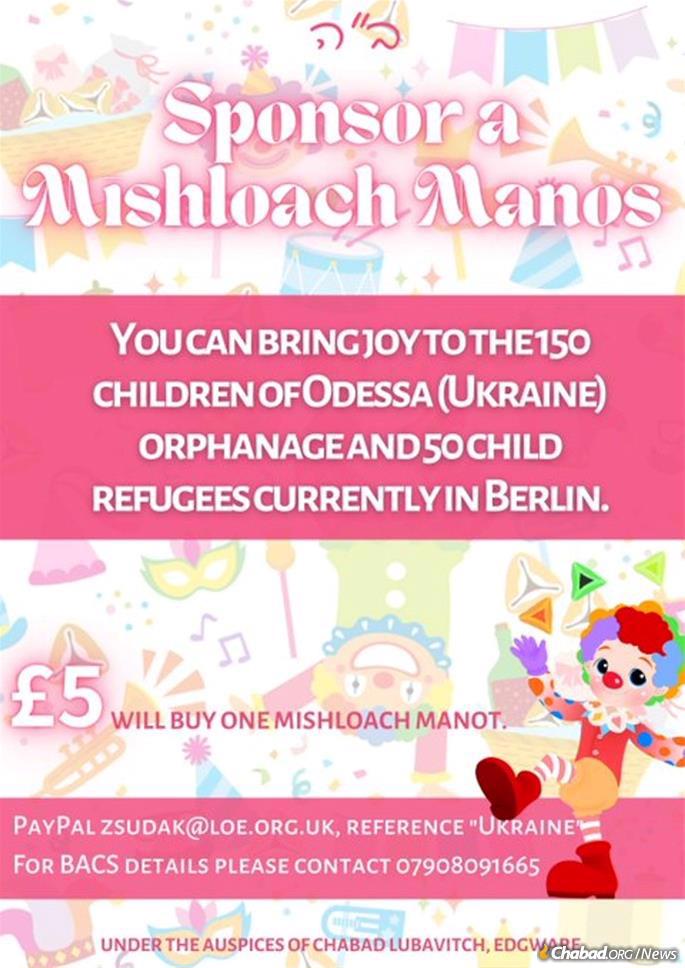
Area children wanted to know what they could do to help, so the Chabad held a pre-Purim CTeen junior event for middle schoolers where the children made Judaic art, which they’re selling with proceeds to benefit a Jewish childrens’ home in Ukraine.
From kids to seniors at their Chabad centers and the world over, efforts are underway to balance the weight of global events and the pure positivity that comes from Purim. Last year, Chabad of Orange County held its celebration outside, in the cold, and it was certainly memorable. “It makes you appreciate the things we took for granted for so many years when we did celebrate together,” says Burston.
Purim this year is a time for coming back together, adds Chabad co-director Chana Burston. “One of the things the pandemic did was remind people how important a sense of community is,” she says. “I think people feel that a lot stronger than a typical event for a typical Purim, because they missed it.”





Start a Discussion