


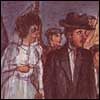
In November of 1928, the Rebbe’s marriage to Rebbetzin Chaya Mushka, daughter of the then Lubavitcher Rebbe Rabbi Yosef Yitzchak Schneersohn, was held in Warsaw, Poland.
By then word of Rabbi Yosef Yitzchak’s heroic struggle on behalf of Soviet Jewry was world-renowned, and the high regard in which he was held was evidenced by the numerous rabbis, rebbes and lay leaders of European Jewry, and the thousands of people from all walks of life, who honored him with their presence at his daughter’s wedding.
At the beginning of the wedding, the Rebbetzin’s father announced:
“It is a tradition that the souls of the ancestors of the bride and groom come and participate in their wedding celebration . . . As my invitation to them, I will now deliver a maamar (discourse of chassidic teaching) which includes teachings from our holy and righteous ancestors: the Alter Rebbe (Rabbi Schneur Zalman, the founder of Chabad Chassidism); Rabbi DovBer of Lubavitch; our great-grandfather (Rabbi Menachem Mendel of Lubavitch—the Rebbe’s namesake); our grandfather (Rabbi Shmuel of Lubavitch); and of my father, the bride’s grandfather (Rabbi Sholom DovBer). As our sages have said, ‘Whoever repeats a teaching should envision the author of the teaching standing before him.’”
Those who attended the wedding later recalled the palpable sense of holiness which permeated the room as Rabbi Yosef Yitzchak delivered the discourse.

Hundreds of miles away, another wedding celebration was being held that night. In the city of Yekatrinoslav (Dnepropetrovsk), the Rebbe’s parents, harassed by the Soviet authorities for their efforts on behalf of Judaism, were denied permission to travel to Warsaw. (In 1939 the Rebbe’s father would be arrested, cruelly tortured, and banished to the gulag, where he died in 1944 of sickness and hardship.)
Prevented by a curtain of iron from attending the marriage of their firstborn son, they were nevertheless determined to rejoice in his joy.
In a moving memoir, the Rebbe’s mother, Rebbetzin Chana, described the wedding celebration held in their home, which lacked the physical presence of a groom and bride, yet was aflame with a joy as powerful as the pain in the groom’s parents’ hearts.
The Rebbe on Marriage
"Husband and wife constitute a single entity, sharing a single soul; it is only that G‑d desired that for a certain portion of its life on earth the soul should dwell in two separate bodies, and that each half should perform its mission in life separately, until such time that G‑d unites them in marriage."
"This explains the tremendous joy that accompanies a marriage—joy which has no parallel in any other joyful occasion. Two half-souls, separated at birth and raised in different homes, different communities, perhaps even different countries, are being reunited by the power of 'He who sits and matches couples.' What greater joy can there be?"
From an address by the Rebbe, May 1984 (free translation)



Start a Discussion